Guides · Vero Beach, Florida
How Vero Beach Got Its Name
The name on the map says Vero Beach, but ask six people how it got there and you will get six answers, none of them certain. The town was chartered on 10 June 1919 with 71 residents, and for six years it was just Vero. Then, on 19 May 1925, it became Vero Beach when it was named the seat of the newly formed Indian River County. The “Beach” part is easy. The “Vero” part is a mystery without a consensus.
Some say it came from a surveyor’s wife. Others point to a settler’s daughter. There is a theory about a Spanish word, a corruption of “verraco,” meaning wild boar. Another suggests a land developer’s initials. None of it holds up. The records are thin, the stories are tall, and the town has never picked a winner. That is fine. A name that resists explanation fits a place that has spent a century becoming something else.
Vero Beach grew because of the water and the railroad, but it was baseball that gave it a second identity. The Brooklyn Dodgers arrived in 1948 and trained here when Florida was still segregated. Jackie Robinson had broken the major league color line the year before, and he came south with the club to a state where he could not stay in the same hotel as his teammates. He trained here anyway. The Dodgers stayed through the move to Los Angeles, and the complex carried their name for decades.
That history is not a footnote. It is the spine of the town’s modern story. The Dodgers left for Glendale in 2008, and the site sat with a question mark over it. Then, on 2 January 2019, Major League Baseball took over the grounds and renamed it the Jackie Robinson Training Complex. The old Dodgertown sign came down in spirit if not in memory. The place now carries the name of the man who made it matter.
The census numbers tell a quieter version of the same story. Vero Beach has 16,785 people and a median age of 52.6 years. More than a third of the housing units—2,805 of 10,173—sit vacant, and 1,762 are held for seasonal or recreational use. This is a town built for winter visitors and long retirements. The median home value is $392,500, and the median gross rent is $1,197. The unemployment rate is 2.9 percent, and median household income is $67,351. Nearly 39 percent of adults hold a bachelor’s degree or higher. It is a comfortable place, and it knows it.
The citrus industry that gave the Indian River its name as a fruit brand as much as a place has been badly hurt in recent years by citrus greening disease. The groves are thinner, the packing houses quieter. But the name still carries weight on a label, even when the trees are struggling. Vero Beach lives with that tension: a brand that outlasts the product.
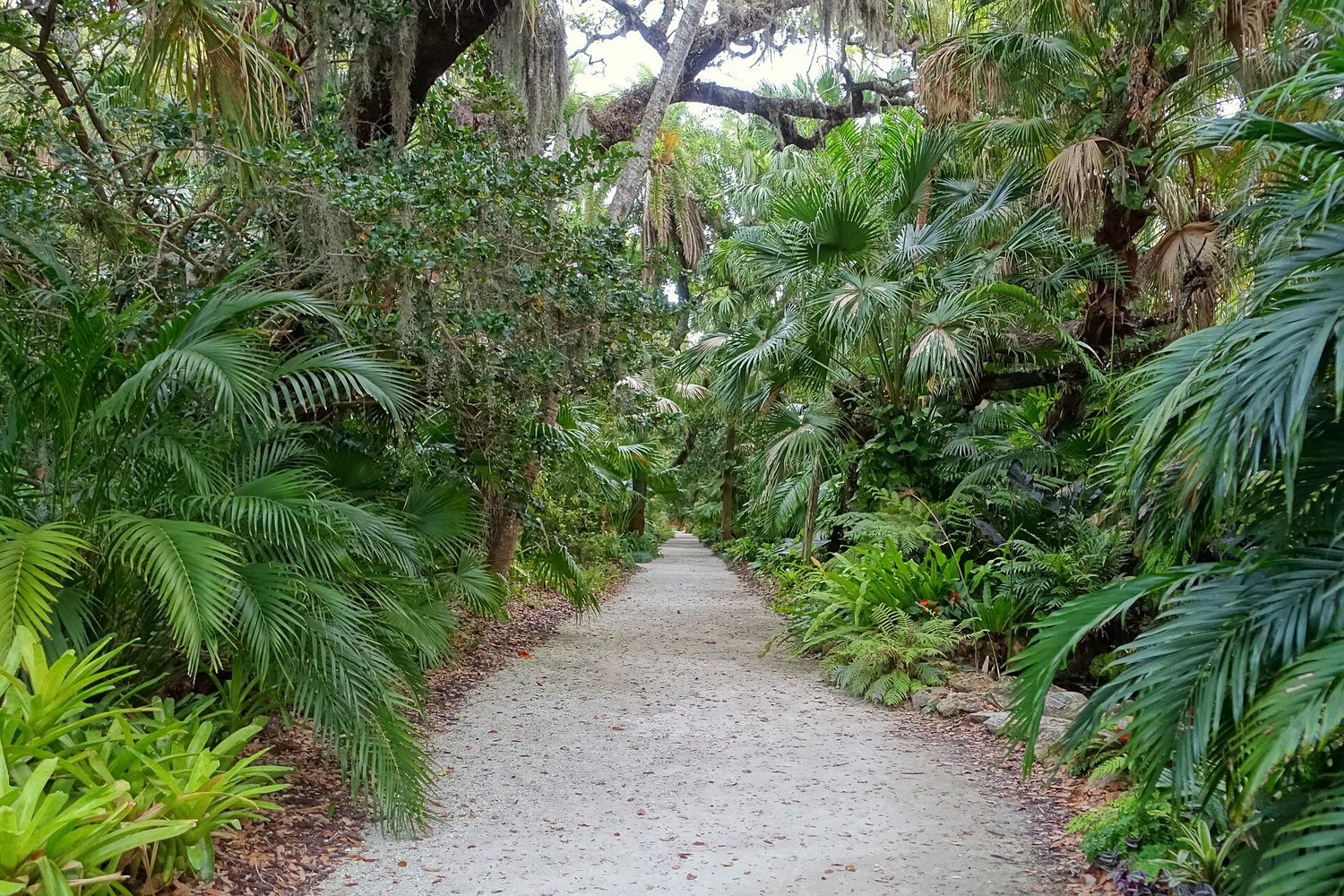
History sits alongside the present in odd ways. The McKee Botanical Garden is listed on the National Register of Historic Places, a green remnant of the town’s early promotional years. The training complex is the other landmark, less botanical and more mythic. Together they anchor a town that does not need to invent a past.
As for the name itself, no one will settle it. The theories will keep circulating, the archives will stay thin, and the town will keep the mystery. Vero Beach does not need a definitive answer. It has a story that starts with 71 people and a vote, and it has a ballfield where Jackie Robinson ran the bases. That is enough.
Every business named above is one we hold a listing for, and every date traces to a source on our sources page. We do not describe menus, interiors or service we have not verified. Details change — confirm before you travel.